
By Pablo Alvarez
A matter of scale
Some catalogues are defined by a single cellar, others by a producer or a run of vintages. Our online "wine o’clock" auction #128 is held together by something more physical: scale. Across 520 lots, the sale moves between monumental bottles, historical singletons and unusually concentrated groups of wines whose interest becomes clearer when they are read together.
The recognition sign of the great format
A magnum may be the perfect measure for two; a Salmanazar changes the scale of the table. Once a bottle reaches Imperial, Salmanazar or Nebuchadnezzar size, it is no longer merely a larger container. It becomes part of the occasion itself. Among people who love wine, the great format is a quiet sign of recognition: it says that the bottle was chosen not only to be owned, but one day to gather a table around it.
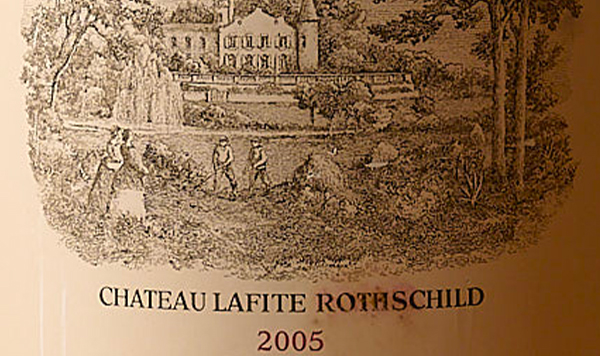
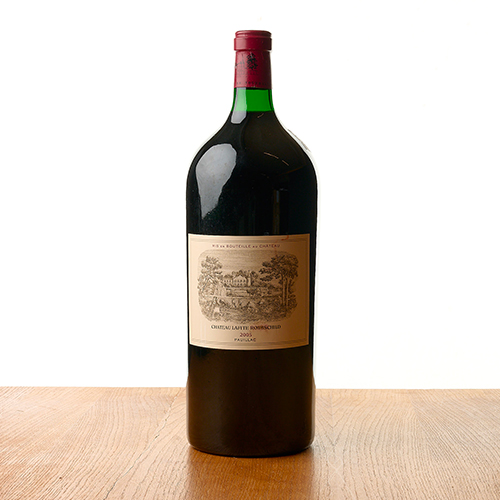
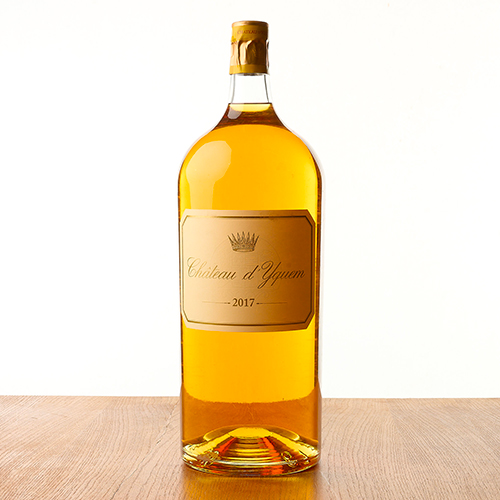
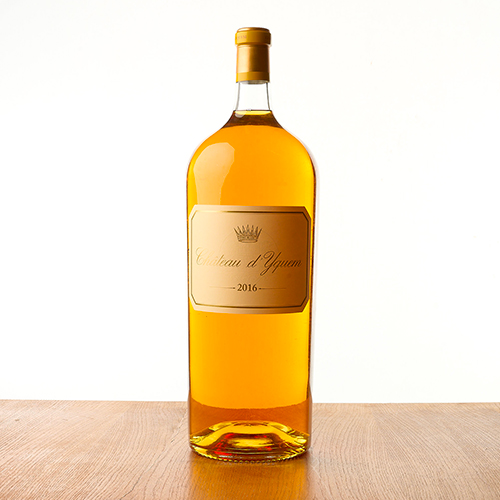
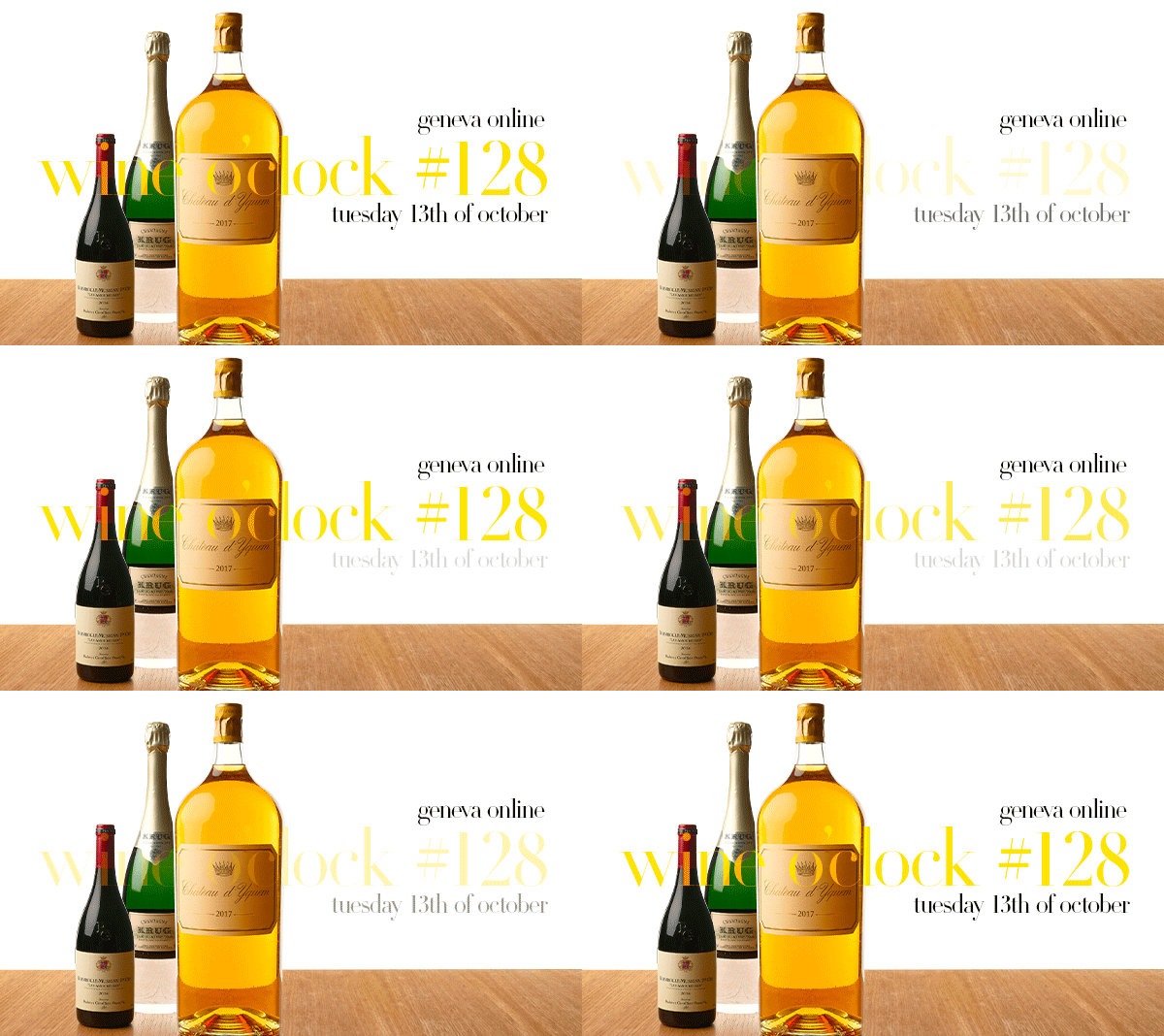
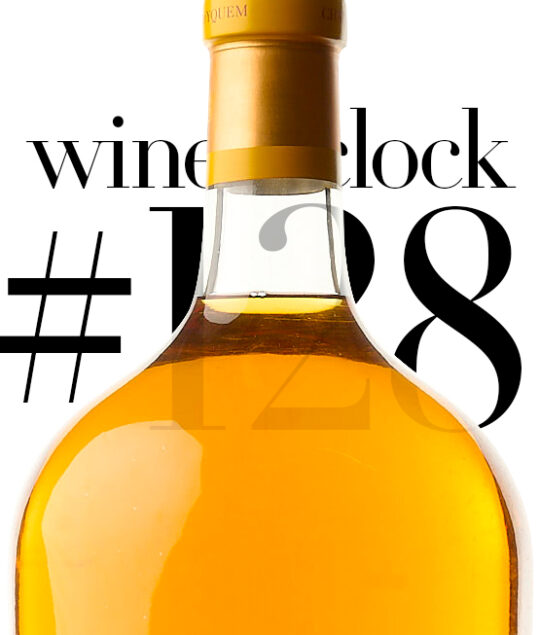
Our online "wine o’clock" auction #128 gives that idea unusual breadth. Château Lafite Rothschild 2005 appears in a six-litre Imperial, lot 177. Château d’Yquem goes further: three individual Imperials of 2018, lots 316 to 318; a nine-litre Salmanazar of 2017, lot 320; and a twelve-litre Balthazar of 2016, lot 322. The catalogue format list also includes a Nebuchadnezzar. The effect is less one of display than of intent — bottles whose scale anticipates the memory of opening them.
Mouton 1945: a bottle that carries its year on the label
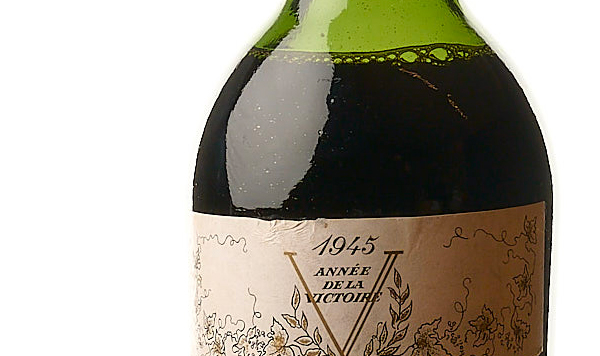
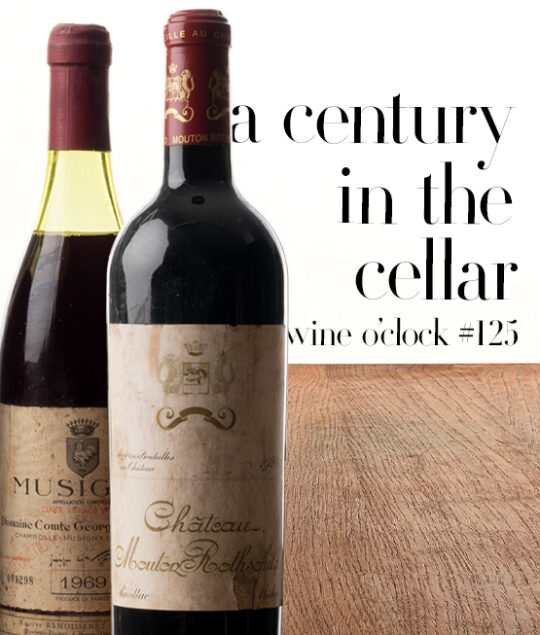
Few Bordeaux bottles connect wine, image and history as immediately as Château Mouton Rothschild 1945. To celebrate the Allied victory and his own return to the estate, Baron Philippe de Rothschild asked the young artist Philippe Jullian to design the label around the “V” for Victory. The success of that commission established the annual artist-label tradition that has since become inseparable from Mouton’s identity. In a sale filled with bottles that speak through size, the 1945 speaks through an image: the vintage is visible before the cork is ever drawn.
White Burgundy, from Chablis to the Hill of Corton
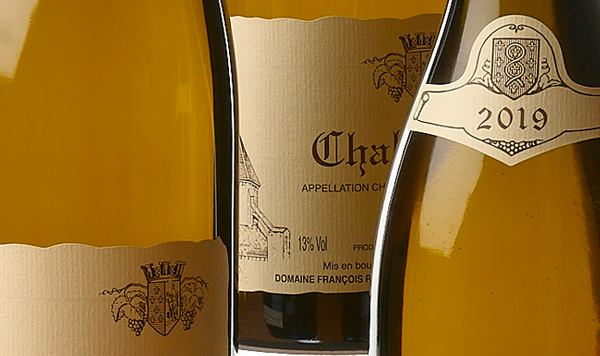
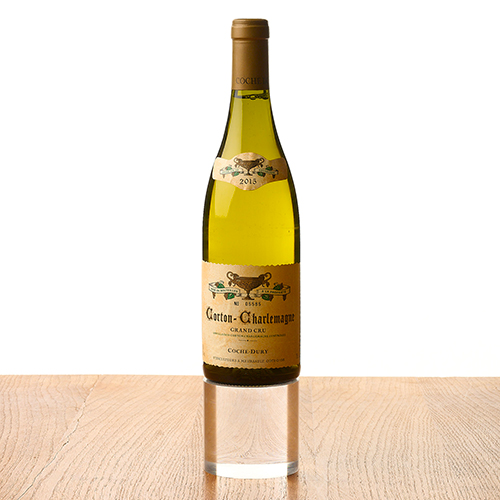
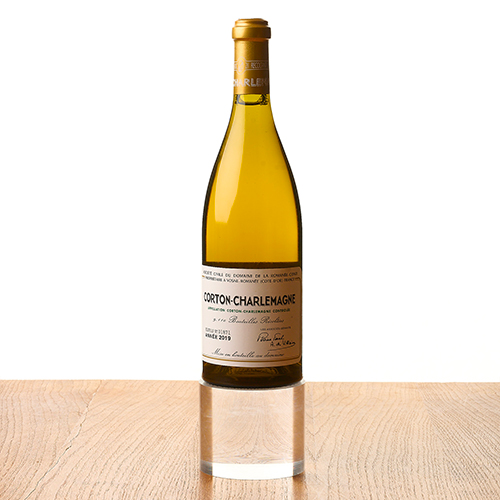
The white-Burgundy selection is one of the catalogue’s most coherent sequences. Coche-Dury’s Corton-Charlemagne 2015, lot 148, is followed by Domaine de la Romanée-Conti’s 2019, lot 149, and two individual bottles of the 2022, lots 150 and 151. The 2019 matters beyond rarity: the Domaine’s own harvest report records it as the first harvest and vinification from its Corton-Charlemagne vines, picked between 22 and 25 September, with an approximate yield of 26 hectolitres per hectare.
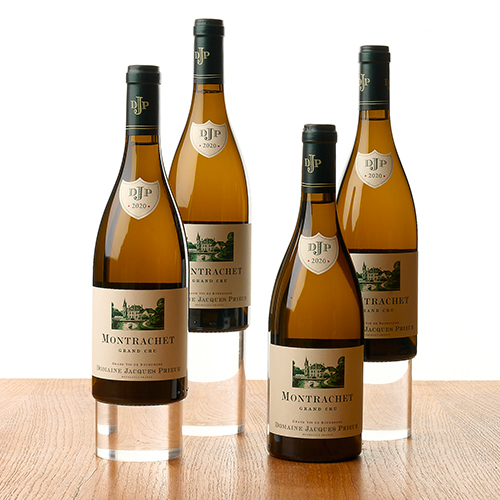
Further along, Jacques Prieur’s Montrachet 2020, lot 165, gives the sequence another Grand Cru centre of gravity. Thibault Liger-Belair’s Corton-Charlemagne “Les Languettes” 2020, lot 170, brings the discussion back to the Hill of Corton and to the importance of position on that slope. The official Bourgogne description places Corton-Charlemagne high on the hill, around 280 to 330 metres, where limestone and clay-rich marls alternate beneath a thin cover of rendzina. Raveneau’s Chablis 2017 and 2019, lots 171 and 172, then change the geological and stylistic register entirely.
Yquem across ninety years
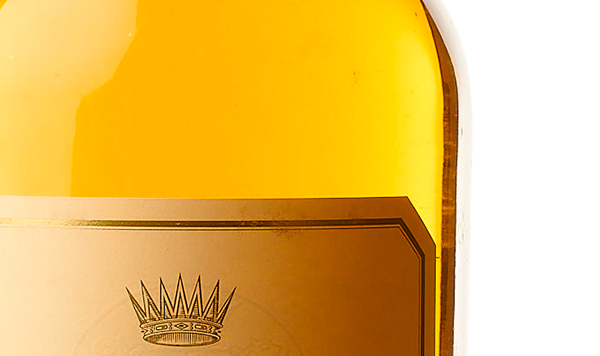
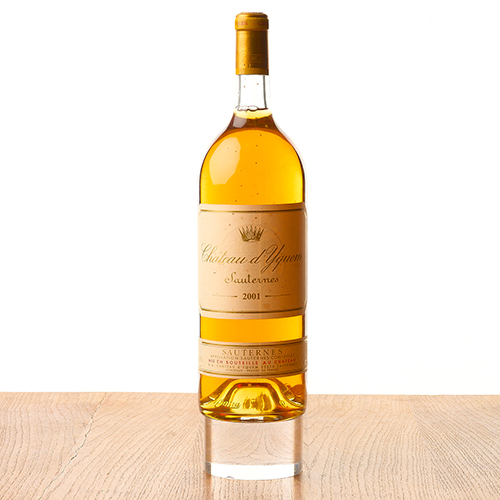
Twenty-seven Yquem lots span 1931 to 2021. The point is not simply chronological depth, but the number of ways in which the estate can be approached: an old bottle, a benchmark vintage, a magnum or a monumental format. Lot 339 is a single bottle of 1967; lot 336 offers 2001 in magnum; lot 341 reaches back to 1931.
For 2001, the wider Sauternes context is unusually well documented. In a 2021 Decanter retrospective, Jane Anson described the vintage as one in which October brought rapid botrytis development followed by the drying conditions needed for even concentration; Yquem’s then technical director Sandrine Garbay recalled an unusually regular harvest rhythm. Jancis Robinson had already called the just-released Yquem 2001 a great wine in 2005. Those references concern the vintage and wine, not the specific auction bottle; they are useful precisely because they explain why 2001 remains a reference point without pretending to assess the condition of this particular magnum.
Two quieter pursuits: Clos Rougeard and Domaine des Miroirs
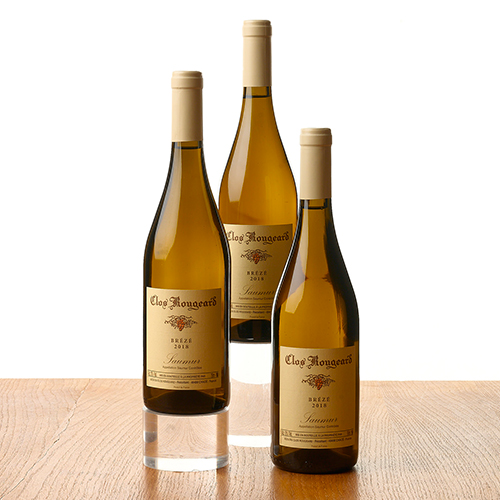
At the other end of the campaign’s scale, Clos Rougeard and Domaine des Miroirs reward attention to small differences. The Rougeard group includes Le Clos, Les Poyeux, Le Bourg and Brézé. The estate describes Le Clos as an assemblage of clay-limestone parcels, Les Poyeux as a gently sloping site combining clay and wind-deposited sands, and Le Bourg as very old vines on shallow clay loam over predominantly limestone ground. Brézé brings Chenin Blanc from the limestone hill of the same name.
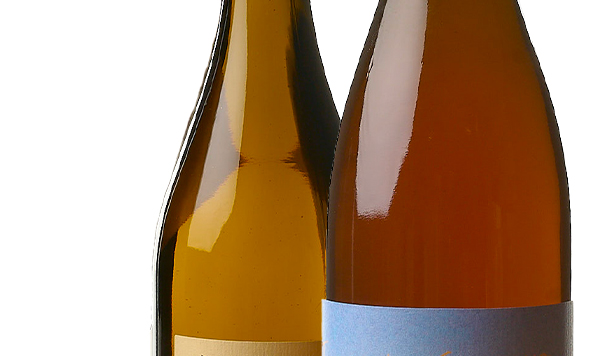
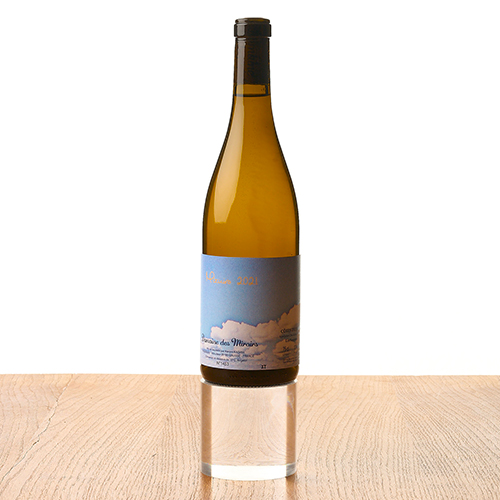
Domaine des Miroirs is represented by three individual bottles: Mizuiro 2021, Sonorité du Vent 2019 and I Need the Sun 2018, lots 426 to 428. For Sonorité du Vent, the documented detail is particularly useful: 100% Chardonnay, limestone-strewn soils, indigenous-yeast fermentation, two years in used tonneaux and foudres, followed by a year in bottle, with no fining, filtration or added sulphur according to Œnopole. It is a reminder that a catalogue of 520 lots can still turn on the intimacy of one bottle